Saturday, September 14, 2013

World War I : A Brief Overview

World War I or The Great War is one of the most important events in the world history. It changed the world forever in every aspect. Even though the war was fought in the European continent, the repercussions were felt throughout the globe. The Great war was fought between 1914 to 1918 between the Central Powers and the Allied Forces. The Central Powers were led by Germany and comprised of Austria-Hungary, Ottoman Empire and Bulgaria, while Allied Forces comprised of British Empire, France, Russia, United States and plethora of other small European nations. Even though the battle already looks skewed in the favor of Allies, Austria-Hungary only looked strong on paper and was weak in reality; While Ottoman Empire was already the Sick Man of Europe. So, the war was actually between the Allies and Germany with little inputs from other Central Powers.
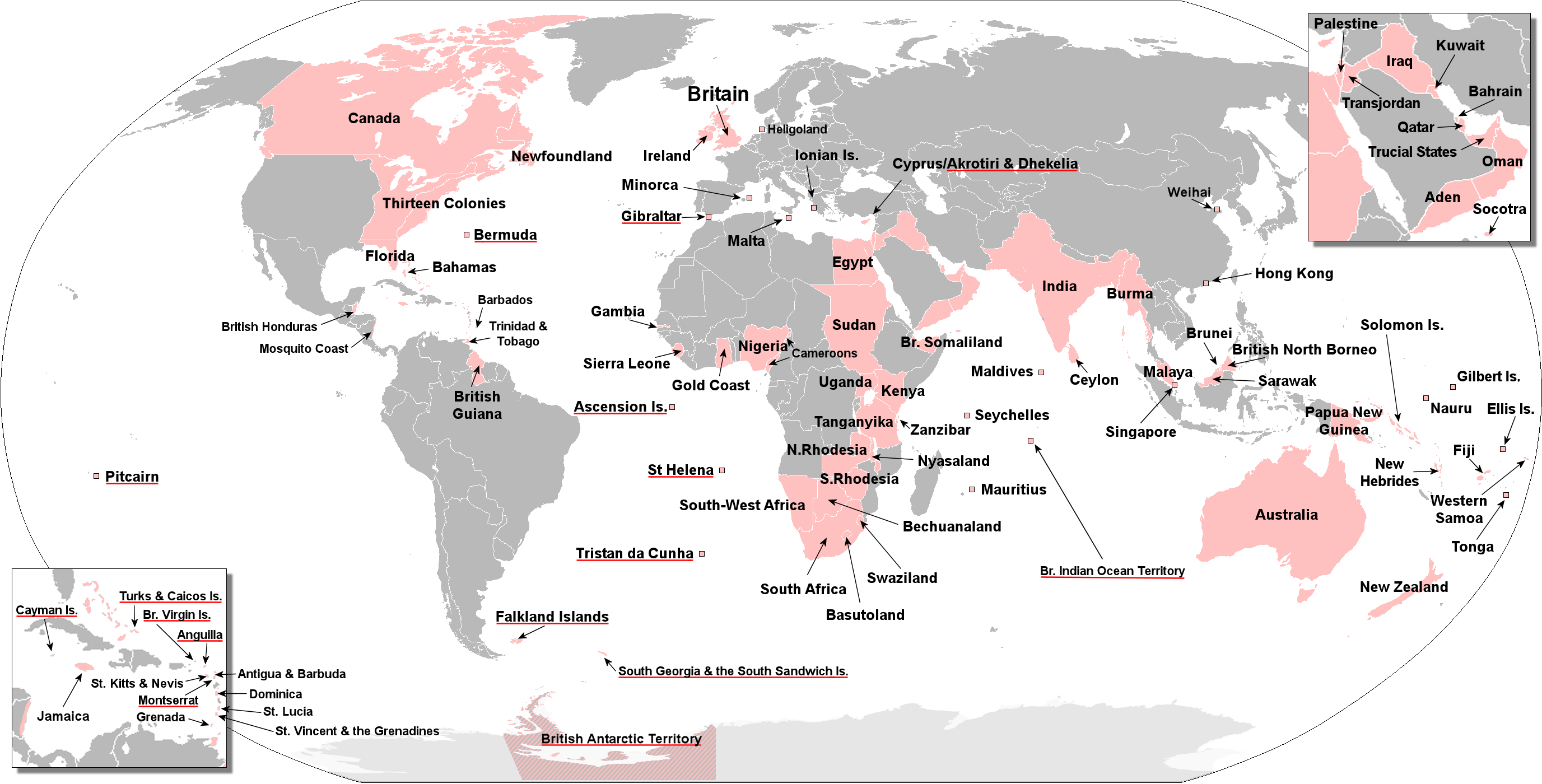
The war was already inevitable in the beginning of century due to the resurgence of capitalism. Industrial Revolution came early in the western Europe and countries like England, France and Holland benefited heavily with that. These countries grew their industrial production rapidly and made colonies all over the globe as markets to sell these manufactured goods. Leading all these nations was the British Empire having Canada, Australia, Egypt and lot of other countries with India as its crown jewel. 


Territories of British Empire atone time or another.


British Empire around the time of World War I  
The newly industrialized nations felt cheated that there were no colonies left for them to exploit. The only colonies left were not as valuable as ruled by British or French Empires. In contrast to them, Germany only had three colonies in Africa. Even despite this disadvantages, Germany grew rapidly and became an industrialized nation. German army became one of the strongest armies in the world. On some social indicators, it even beat England. In England, the resentment against Germany started growing. So, in the first decade of twentieth century, almost all the countries of Europe started war preparations internally; nations were stockpiling ammunition as the war was inevitable in near future.
The spark to this bubble of gas was provided on 28 June 1914, when the Archduke Franz Ferdinand, the heir to the throne of Austria-Hungary was assassinated while his tour of Bosnia. The assassination was done by a Serbian student, and thus Austria blamed Serbia; Serbian apologies were unaccepted and an ultimatum was given to Serbia to accept 10 unacceptable demands drafted in a way to provoke war. Still Serbia accepted 9 out of 10 demands. But this was not enough, and one month later on 28 July, Austria-Hungary declared war on Serbia. The Russian Czars didn't wanted to lose the influence in Balkan States and ordered  a partial mobilization of troops one day later. Germany saw this mobilization of troops as a threat to herself and launched attacks on France and Russia on 30th July. Between the two hostile nations of France and Germany was a neutral land of Belgium. Germany asked Belgium to allow German troops to pass through so that they can attack France. Belgium refused; Germany attacked Belgium on 3rd August. Britain took advantage of this and used this violation of neutrality pact by Germany as a reason to launch war against it. So, the World War stared with The Triple Entente of UK, France and Russia against the Germany and Austria-Hungary. Italy kept watching and joined the Allied Forces next year. Both the groups tried to take other nations into their sides by offering them promised territories once the war is over.
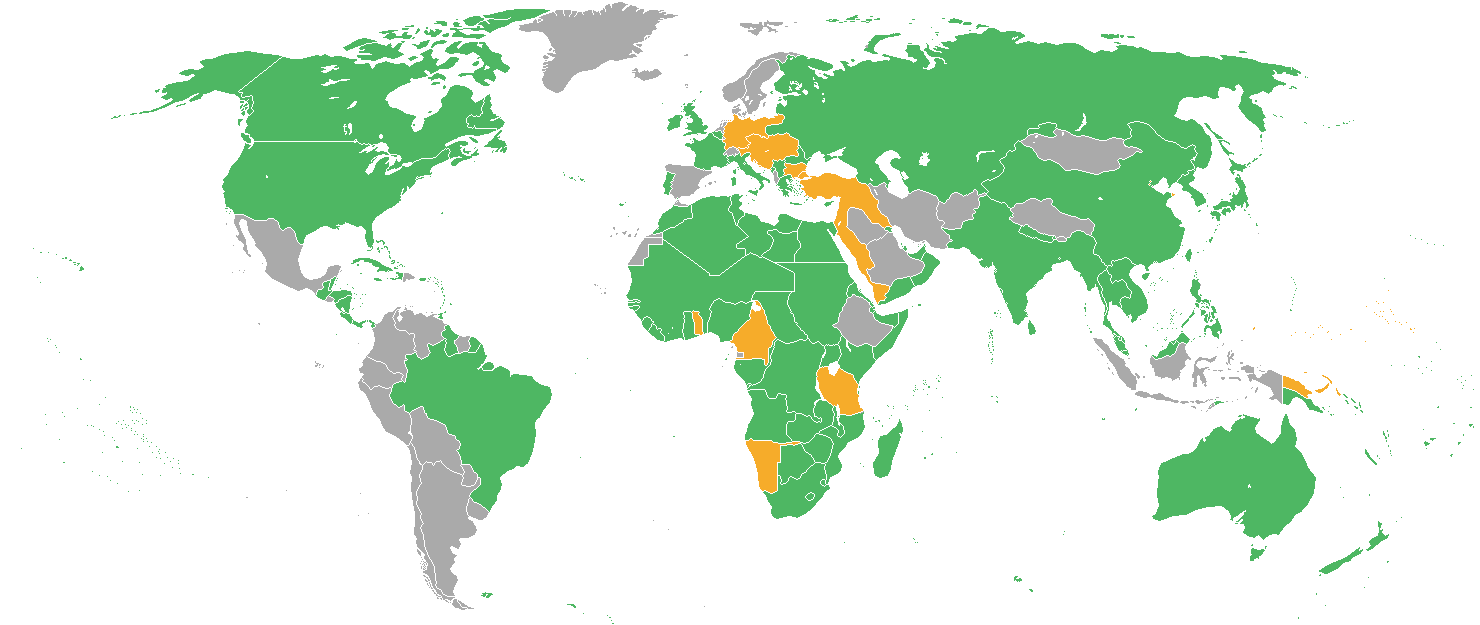
Allies(Green) Vs Central Powers (Orange)
Germany gained quickly on the French troops and took control of important industrial regions. But after initial success, French were able to stop them 70 km from Paris. This turned out to be a major turn in the war as after this the trenches were formed and trench warfare kept on going on for 2 years. It led to stalemate with no side gaining any territory. The Germans used chemical weapons like Chlorine gas and mustard gas, but still the stalemate remain so. The war also led to introduction to technological improvements in warfare with tanks and aircraft's introduced in war front.

Meanwhile, another battle was being fought in the seas. The British Navy was the biggest and strongest navy in the world and it started a blockade of Germany in order to starve her and force her to surrender. While a counter offensive was launched by Germany to blockade Britain who was dependent heavily on imports for food supplies. German submarines hunted in the international waters to block ships entering into British waters. In 1917, Germany was tired and the British blockades were making a serious dent on Germany. So, they changed their strategy to attack even neutral ships coming to Britain with supplies. On 6 April, 1917 US declared war on Germany after Germany sank 7 US merchant ships and tried to cajole Mexico in joining the war against US. But these were not the only reason why US came into war. The another reason was money.

Every war needs money, lots and lots of money. In the beginning, France financed the Allied war, but by 1915, France was done. So, Britain stepped in and started financing the whole war. Britain financed for one year. But by the year of 1916, Britain also got broke. Then, both Britain and France went to USA for help and asked them to finance the war. USA agreed and started lending heavy amounts to Allies for their war. US had invested so much money in the war that if Allies had lost the war, US economy had gone into a recession. So, to save its own skin, US jumped into the war. The entry of US changed the dynamics of war totally. 

But there was one more major event left to happen. This was to happen on Eastern Front. The Russian armies fought with the Austrian - Hungary armies and were pushing them back easily. Then, Germany sent her troops and they were able to turn the tides. The superior German army - better led, better trained and better supplied were terrifyingly effective against the ill-equipped Russian forces. Moreover, the burden of war was too much for the common man of Russia and this increased the anger of people against the Tsars. Various strikes and demonstrations started against the Russian king. The biggest of this revolt started November 7 1917 as the October Revolution by Lenin. This led to the coming of Bolsheviks to the power. Bolsheviks led by Lenin had a socialist agenda and they wanted peace at any cost. Thus, the treaty of Brest-Litovsk was signed between two, with Russia paying a heavy cost.

But this brought an advantage to Germany, that now they can shift their entire focus on the Western Front. At this time, Germany was strong enough to fight with the France and Britain and win. Thinking on the same terms, Germany launched the Spring Offensive in 1918 and thought to win the war before US forces make any major contribution. But the Russian Revolution was impacting German people also. Now, people of Germany were also tired after fighting such a long battle, they wanted peace.Anti-war protests started in Germany and the soldiers shifted from Eastern front told other soldiers of the Russian Revolution. Thus, Germany started to weaken. Moreover, the Spring Offensive did not provided her with any major gains as due to improper supply lines and lack of tanks and artillery, Germany was not able to consolidate any considerable gains.

In response to the German Spring Offensive, Allies launched a counter - offensive named as Hundred Days Offensive. It began on August 8 1918 with the Battle of Amiens. This became a successful strategy and the Allies were able to gain considerable areas in the war. The weak Germany with a blockade leading to starvation at home, talked for armistice, but the Allies refused and demanded abdication of Kaiser. Thus, the Imperial Germany was no more and a new Republic Germany was formed.  But, the British did not removed the blockade till 8 months of peace treaty signed. The blockade led to starvation in Germany. The Blockade was not removed till 12 July 1919 when the the Treaty of Versailles was signed between Allies and the Central Powers. These times became one of the most devastating periods for the German people and it was claimed that 100,000 Germans died due to the continuation of blockade. German Chancellor Hollweg sayed that "and our children, and children's children, will bear traces of the blockade that England enforced against us, a refinement of cruelty nothing  less than diabolic."

Thus, the Great war ended in 1918, and the world was changed entirely. New nations were formed. Many old were no more. The industry, economy and politics of the world was never the same. The treaties done by Allies were very harsh and sowed the seeds for the World war II. Whatever happens, the World War I will be always remembered for the impact it had on earth.

Thursday, September 12, 2013

The Mobile Timeline

Till now, I have had a number of mobiles, this post is a collection to just remember the best gadget known in 21st century. 
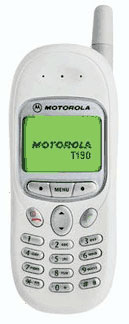
  • Motorola T190: This was my first mobile phone which I started using around 2003. It was of a white color and the body was sleek and sturdy. There was a small antenna protruding from the top right corner, but overall the design was good. The best feature of the phone was the small size of the mobile. Today, I may be using any smartphone, but the feeling I got after using this phone was amazing. It did not had any features of today's smartphones, but truly your first mobile phone has a je ne sais qua which binds you with it. 
Motorola T190
  • Nokia 2300: Nokia's 2300 was my second mobile. I got it from my sister in 2006. It was then the new kid in town and was a head turner with its sleek design and eccentric keypad. It was of greyish color. The display was much better than the Motorola and it also had FM Radio. I still love this phone. I still remember the nights I wasted playing Snake II, Opposite and Space Impact + on it. I made huge high scores on it. It also had polyphonic ringtones and a composer where one can build one's own ringtones. I remember how I used to play with composer and trying to build a new tone.
Nokia 2300
  • LG KS 360: The next phone in line was the LG's KS 360. It was a blue color slider phone with QWERTY keypad and touch screen only on keypad. This was a little weird feature as the touchscreen only worked while dialing numbers. I used this phone a lot during my college. It also had a small camera, but the quality was moderate only. I bought this phone from my cousin around 2009 for 4000 bucks, but totally loved it.
LG KS 360

  • Nokia E63: This phone I got in 2011 from my brother. It was a red color candy bar shaped phone with a qwerty keyboard and other advanced features like Wi-Fi. I used this phone during my last year of college and the first year of my job. E63 also supported Symbian app store and I watched countless videos on YouTube on this phone.Other apps which I used a lot on this phone were Whatsapp, Word and few Java games. As of now, the phone is horrible situation. The back cover is fully cracked and is going to break. The keyboard has lot its luster and the battery life is pathetic. But, I cant remember the moments I had with this phone.
Nokia E63

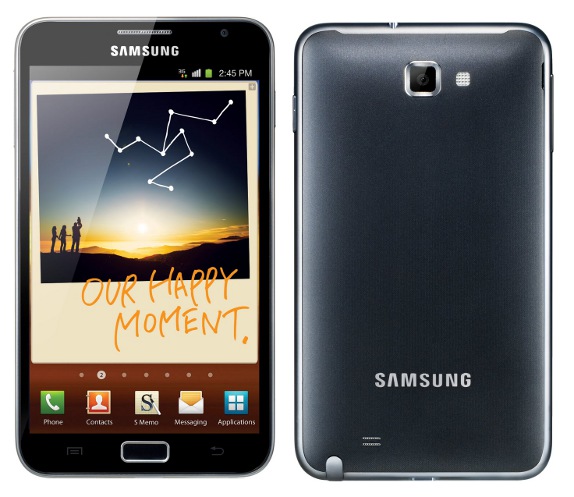
  • Samsung Galaxy Note: This was the first mobile phone which I bought with my own money for myself in May 2012. I was so excited to buy it. Never before I had the chance to buy something for myself. It was a top end Android phone with all the best features of the time. It was like a dream come true. I spent 1.5 times my monthly income on this phone. Now, I believe how naive I was. It got stolen at a bus stop one month later; even before I had the chance to pay the first EMI.
Samsung Galaxy Note
  • Nokia Lumia 720: The latest smartphone still with me is the Lumia 720 powered with Windows Phone 8. It is a gorgeous phone with great look and smart features. I am loving it even more than the Note. There are very few apps in comparison with Android or iOS, but it feels good to use. My phone is yellow colored and to truly say, I am still in fear that it is not stolen again. Don't know when I will overcome this feeling.

This is the list of phones till September 2013. Lets see who's next...

Monday, August 26, 2013

How The Synergy Of Microsoft And Nokia Is Going To Challenge The Existing Giants Of Mobility‏

The world of electronics is a rapidly changing environment where  new changes come every day. In the lifespan of mobile communication, the first revolution came in 2000s when the cellphones became ubiquitous. The mobile phones of this age were much more advanced than their counterparts in 1990s in size and functionality. As cellphones became more and more common, their size and price started to decline at a much faster rate. On the front of this revolution were companies like Motorola and Nokia which sold a lot of phones at this time. Everyone was amazed to see Nokia 3310 launched in 2000 which was so small in comparison to Motorola DynaTAC, the first mobile phone ever. After this Nokia, never looked back and launched a slew of budget smartphones at a low cost. At its peak in 2008, Nokia sold around 475 million smartphones and was the darling of the stock market.
But then suddenly, an unexpected revolution came into spotlight – the iPhone. Apple launched the iPhone in 2007 to worldwide acclaim and showed the world a new possibility, a new kind of smartphone. A smartphone which allowed you to do anything from watching videos, browse internet, take photos all with a touch. The whole market of smartphones changes overnight. Samsung saw this is opportunity and moved on to Android – a new smartphone OS inspired from iPhone’s iOS, but unlike iOS it was open source. All the phones being designed now were touch based except few small feature phones. The open source nature of Android gave the manufacturers an opportunity to release these smartphones at various touch points rather than the expensive iPhone.
But on the same time, one another software giant was shocked. The release and success of Apple’s iPhone had put them in a dilemma about their future – Microsoft. Microsoft judged their situation and an urgent meeting of the leads was called. There the executives decided that the current operating system was too old  and was not ready to take on the fight with the fluidic iOS. They needed something new. So, there they decided to create a new operating system from scratch; a new operating system which was born to challenge this new order; a new OS which was created for this new revolution. This is how Windows Phone 7 came into existence in 2010.  Rather than copying the same interface of Android or iOS, Windows moved to a new interface called as ‘Metro Interface’ with live tiles. 
Meanwhile, on the other side of the globe, in Finland Nokia was in distress, their market share was being leeched by these new smartphones rapidly. They needed someone who can control this falling giant and regain their market supremacy. Then, the board of Nokia took a radical decision, they choose Stephen Elop, a Canadian citizen who was leading the Microsoft’s Business Division to become CEO and becoming the first non-Finnish director of Nokia in its long history. Stephen took control in his hands from the beginning; soon after his joining he sent an internal memo to all employees titled ‘Burning Platform’ a daring memo which told all the employees that Nokia has to make a decision now about its future and a good one , otherwise they will be gone forever. On February 11 that year, Nokia announced a new strategy:
  • They will have a long term strategic partnership with Microsoft to build a new ecosystem and Nokia will choose Microsoft’s Windows Phone 8 as their new smartphone operating system. 
  •  Nokia will focus on next generation technologies and will bring out meaningful innovations in its smartphones.
  • Nokia will have a new leadership and a brand new organizational structure to focus clearly on speed, results and accountability.

 As a result of this partnership, Nokia has been releasing phone after phone on the Windows Phone platform and yes speed they have picked under Elop’s new leadership. Unlike earlier when there used to be a lot of time between new models, now the Nokia machine is churning mobiles at a much rapid pace. Results? Yes they are coming. The new Lumia series has got rave reviews all over the world and they are gaining commercially also. Just few weeks back Windows raced past Blackberry to become the third largest with a market share of 3.7%. This is still  minute in comparison to more than 60% share of Android, but still this marks an important milestone as it crosses an important psychological barrier.
Now, this is the time for Nokia and Microsoft to bounce back and reclaim their top spots. Android is too far away in the top. But in next two years, if guided properly, the joint alliance can leave Apple’s iPhone ecosystem behind. After the death of Steve Jobs, innovation has declined rapidly in Apple. Not even a single new product range has been launched. Only the same products are being launched with minor up-gradations. The launch of iOS 7 was a much needed input to the creaking old operating system. But still the world is waiting for that next revolution by Apple which they showed in the Jobs era. Apple is weak now and it will take them time to bounce back even if they could. Moreover, people are bored by the similar look and feel of both Android and iOS which are just poaching features from one another. They want to try something new; which is an opportunity for Windows Phone. So, what can be done to bring this change faster. I have some thoughts which are listed below:
 Lack of a Good App Ecosystem: This is a known fact that one of the biggest drawback of Windows Phone 8 is the absence of a rich app ecosystem. Many big names like Instagram, Vine, Google Maps, Flipboard and lot others. Unless this is fixed, it would be really difficult for the OS to catch up speed. Now, Nokia is pretty serious about it and has released a lot of their Nokia exclusive apps, but I believe the problem is with Microsoft side, which despite being the biggest software company in the world has not been successful in wooing the developers on its side. The newly released App Studio is a welcome step for the novice users who want to create apps, but don’t want to delve deep into the coding. Windows Phone needs to catch up and has to catch up pretty fast. I believe hackathons should be organized all over the world and then incentives should be provided to students in universities to make apps for Windows Phone.
·         Buggy Operating System: Despite being in the market for 2 years, the Windows Phone OS is still having some huge and creepy bugs. The storage issue bug which duplicates the photos and music stored on memory card is a big turn off. Microsoft should test the OS properly before releasing the OS in market, so that such shameful scenarios are not faced in future again.
·         Faster New Updates: It seems like Microsoft is not that serious about its mobile operating system or they are unaware of the trends here. After the launch of Windows Phone 8, not even a single update has been launched . In this fast changing market of smartphone with the cut throat competition between various tech giants, the need to launch updates better and faster than others becomes more important.
·         New Innovative Features: One more challenge that lies ahead of this alliance is to introduce new meaningful innovations to this ecosystem, in both hardware and software. Nokia has been leading in this area with innovative camera features like PureView, Optical Image Stabilization. The newly introduced Lumia 1020 is a piece of art and is a really good camera phone with a software app that lets user take full use of the powerful camera. Nokia is investing a lot in research to bring out some really cool phones. But, now is the time for Microsoft to also spearhead its campaign to make Windows Phone more better. They have  done a  good work with the creatively create Metro Tiles look, but a lot of more work is needed. Moreover, while adding innovations the companies should think whether really they are useful in real life or just they exist on paper. The innovations shown by Samsung are not up to the mark in my opinion. The features like Direct Call, Zoom are just waste.
·         Renewed Focus on Marketing: The one  area where Microsoft and Nokia are doing pretty well is the marketing. There has been a new impulse of Microsoft in advertisements targeting Google and Apple. This is required to challenge the current leaders. Some of the ads I saw were really great. Keep going on with this focus. 
Nokia and Microsoft has the required potential to create a niche for themselves in the mobile market. They may have missed some key steps and lost some wars, but the battle is still out there. What they need is a renewed focus and commitment and the mobile world is all theirs.

Saturday, August 17, 2013

Spread of Ideas in the World

The 17th and 18th  centuries were a period of ideas and revolution, people started challenging their beliefs and started questioning the church. Finally after remaining dormant for so long, the human spirit of curiosity was taking over the brainwashed minds of people. As with any new change, people were reluctant at first with this new change in their lives. These ideas first affected the intellectuals of the age and gradually they came to common people.

One of the most radical ideas to affect the common man was science. Of course science was there from a long time, but it was not in the grass roots levels. It was being opposed by religion and superstitions at every step, countless of great minds lost their life due to the interference of Church. But people who believe in their ideas, don't stop on petty things like death. They keep pushing on their ideas and become immortal. Just take the example of Socrates who consumed poison rather than accept lies. With the advent of Industrial Revolution, science became a necessity and people realized that they cannot ignore it. The theories of scientists like Charles Darwin, Issac Newton, Leonardo Da Vinci influenced people and brought them closer to rational thinking.

Another idea that came into prominence in 18th century was 'Democracy'. The idea that all people are equal and they have a right to live the life as they want. Democracy enabled the people to vote and select the governments. It was a radical change from the despotism of the earlier ages. The Independence of America from Britain showed the whole world this new idea. The French Revolution further strengthened this idea and many people started seeing this new way of life. People started demanding their rights and revolutions started erupting all across the Europe. Governments first ignored this,but the success of French revolution shocked the whole continent. Kings and Queens were amazed, how the powerful king Louis XVI was executed publicly. As a result of this and other numerous acts, monarch across whole Europe started a parliament with representatives from people. Britain took a lead in this and started House of Lords and House of Commons (however they were started earlier than this period, but it further strengthened their power).

But even, after the democracy the progress in the standard and liberty of living was not as expected. The people who were given responsibility of the unions usually did not remember the same once they occupied top positions and quelled the protests by their own people. Moreover, the industrial revolution had changed the world and the capitalism had brought new challenges with it . The workers condition was deteriorating day by day and the concepts of liberty and equality were not being applied at all. Few intellectuals then realized that a change in ideas was required to conquer these new challenges. Thus, came 'Socialism'to birth. Socialism started with a simple idea that capitalism is evil. Private individuals only keep their profits in mind and don't work for the well-being of society. Moreover, cut throat competition in the society is not good as it results in wastage of efforts. In spite of this, state should take control of resources, production and services and thus distribute wealth equally to the people.

Intellectuals believed that this will bring an order to the society and fill the gap which democracy was not able to fill. Democracy believed that all people are equal and thus should share equal rights. But, in reality, it is not like that people are different as a result of their upbringing and their nature which also depends on their culture, family, education and myriad other factors. There will be a lot of difference between a person who is educated and the other who is not. Thus, if states takes the production and services in its hand, it can distribute it much evenly. Slowly this idea started to spread like fire especially in Russia where Lenin imposed it after the Russian Revolution.

Another idea that came during this Age of Enlightenment was 'Anarchism'. This idea was based on the idea that the best government is one which does not interferes at all . The people following this idea believed that there should be no government at all and individuals should be responsible for their and other's freedom and rights. This started with a noble idea and lot was discussed about this, but it never became popular as its whole concept was based on the existence of such an Utopian society where people are not selfish and people want to live in peace. Moreover, few groups believing in the anarchism started to become aggressive in their approach. Slowly, people forgot the real meaning behind this philosophy and attached it with violence and chaos which is still true today. Even in dictionary, anarchy means : "A state of disorder due to absence or nonrecognition of authority."

Another great personality of this age was a German scholar Karl Marx who gave birth to Marxism. Karl wrote books like 'Das Kapital' and Communist Manifesto which appealed to workers all around the world for their rights. The ideas for marxism were taken in socialism and a large gathering followed his set of ideas.

Thus, we can say that this period affected the people of this world and changed the way we are living today.  An order of change came in the world and people moved from the past and accepted the future. An era had came to end, and new was just beginning.

Wednesday, July 24, 2013

The End of an Epic Story

Just 2 days back, I was finally able to finish the epic miniseries 'America : The Story of US' which I was following from a long time. The series had 12 episodes explaining the whole story of the strongest nation in the world - USA. The story takes the viewer from the early settlements in Jamestown to the terrorist attacks of 9/11 in New York. Over the whole series, a lot of praise has been showered over the country and how it conquered the world through their hard work and tenacity. The documentary shows how the small 13 colonies started and gave birth to one of the biggest nations on earth.

As per our last discussion, the America was on the verge of American Civil War due to the indifference's in the North and South over slavery. On April 12, 1861 the war finally started between the newly formed Confederate States of America and the Union. This war changed the facade of USA forever. Abraham Lincoln was the president at that time and the led the Union's army. Lincoln paid more emphasis to technology from the beginning and his investments in telegraph, railroads, increased industrial production and supply lines proved too advanced for the formidable army of South. In the end, South surrendered on May 10, 1865 after four years of bloody war.

The next episode 'Heartland' explores the further development of the hinterlands of the continent. The trans-continental railroad also known as the Pacific Railroad was started just before the American Civil War and is considered one of the greatest technological feats of that time. The railroad united the whole nation and made travel across coast to coast possible in a short duration. During this period, lots of people migrated to the plains of Oklahoma and Nebraska in search of land. These plains provided them with free land, but also the hardships of this tough region. As the settlers came, the native population was driven out and the local flora and fauna was destroyed to a large extent. The wild buffalo's once roamed these great plains in millions, but they were hunted ruthlessly for money. Slowly the cattle's replaced wild buffalo's as the main beast of the land and the cowboy became the national icon.

The next episode pondered over the growth of cities in US. Andrew Carnegi started an empire of steel, with his new technological innovations in steel making and made him one of the richest people on earth. This cheaper steel made possible the development of skyscrapers and other US national developments. America grew rapidly during this period and the life of people all across America improved. NewYork becomes the city of skyscrapers, with the most number of skyscraper among any city in the world. Meanwhile,the Statue of Liberty is gifted to USA at the 100 years of US Independence (October 28, 1886). This was placed at the New York harbor as the gateway to United States. Since then, this colossal statue of copper which has now oxidized to green color has become an American symbol.

The boom age of America begins with the start of 20th century; the discovery of oil makes America one of the largest producers of oil and also one of the richest. All over the America, people are investing in oil exploration and nowhere is this on a bigger scale than Texas. During the same time, automobiles become famous in America, but their high costs keeps them just in the reach of rich. But Henry Ford changed the whole industry with his innovative assembly line methodology to develop cheap cars at a much larger scale. In a few years, America became the biggest producer of automobiles in the world. In the same time, massive projects are being undertaken throughout the America to develop and modernize the continent especially in the Western part. But with great power usually comes great issues also; the increased money of Americans leads them to alcohol and the problem increases to such an extent that the government passes an amendment in Constitution for prohibition of sale of Alcohol in US. But, somethings cannot be controlled. The prohibition gives birth to a black market for sale and distribution of Alcohol and further gives birth to organized crime.

But as they say the only thing constant in the world is change itself. Boom is changed to bust when Stock market crashes in 1930's leading to vast unemployment and shrinking of economy. In addition to it, the dust bowl causes severe damage to North American Great Plains. This was the period when massive dust storms appear over the American continent and affect the land severely. The Federal government tries to spur recovery by investments in major projects like Hoover Dam, Lincoln Tunnel etc. which provide employment to many people.

The major change to American economy comes when the terror of World War II strikes America. America was having a neutral status in the war until Japan attacks Pearl Harbor and awakens this sleeping giant. The entry of America in the war shakes the whole country. Industries are revived again and production skyrockets. America shocks the world with her technological prowess and industrial might. New weapons are developed at a scale never imagine before. It was this war which led to development of Nuclear Weapons through the Manhattan project. The first two nuclear bombs were used on Hiroshima and Nagasaki. The destruction through these two led to Japan's surrender and World War II ended finally in 1945. 

The end of war led to a new era of development in the country with America becoming a superpower. The greatest generation returns from the war and a baby boom occurs. This is a time when huge strides are made in space and technology. Soviet Union and USA move into a space race over who will be able to send a man first on moon. America wins this war by its Apollo 11 mission which took Neil Armstrong and Buzz Aldrin to moon. This era experiences lot of hot issues like Cuban Missile crisis, Vietnam War and Communism. But with the division of Soviet Union inn 1989, cold war ended and a stability again resumed in the world. 

The last episode of the series depicts America in 21st century. How far it has arrived from its humble beginnings with the independence of 13 colonies from Britain. The world has moved also with it and this new era brings with it new threats and new opportunities. The 9/11 attacks on New York rumbles the whole country and the country one's again unites against the external threat of terrorism. America attacks Afghanistan in 2001 and Iraq in 2003. The journey of America keeps on going towards the future, even though the story comes to an end.

Monday, June 24, 2013

Moser Baer: A Perfect Example of a Company's Inability to Forsee the Change

Moser Baer is one of the biggest success stories of Indian manufacturing industry. Just a few years back, I used to feel proud, whenever I used to see its story in print media and online. It was a perfect example of the spirit of entrepreneurship, how a company started from scratch became the second largest manufacturer of optical disks in the world. In this age, where even the term manufacturing reminds us of China, it used to shine as one of the few flames of the Indian manufacturing story. The company was started by Deepak Puri, with international collaboration to make storage devices. The company started with floppy disks, but got into mainstream near 2000, when seeing future growth in optical disks, they invested huge amounts into capacity addition. Soon, Moser Baer started exporting all varieties of optical disks throughout the world through its manufacturing plant in NCR.

The only real competitors for it was some Taiwanese companies like Ritek, who seeing the growth of Moser Baer, started shifting their manufacturing to China. The move to China was going to lower the cost of disks drastically, thus reducing the profit margins of company. In response to it, Ratul Puri son of Deepak Puri, took a bold decision to increase capacity to 3 billion disks a year and thus forcing the prices down. But, what they forget was to see the ongoing change in the storage industry. The biggest factor in technological industry is the continuous change; the prices of flash devices fell and the world moved on to pen drives and thumb drives from CD’s and DVDs. The additional capacity increase brought a major debt on the company, while the decreasing demand eroded margins further.

Now, the company is in shambles. One of the major investors, Warburg Pincus has sold his stake at a huge loss. The current CEO, Ratul Puri knows this and has shifted his focus to solar power. He knows that his company is still a leader in micro-coating of surfaces, and has the potential to move ahead in this sphere due to increasing demand. But, again China factor has come into play. Due to government subsidies and a favorable business environment, China is now the world leader in solar panel manufacturing and produces a quarter of the world production. The lower prices and high volumes of Chinese players are one of the most difficult challenges for Puri. Further, the failure of Moser Baer is shadowing the moves of Moser Baer Projects; it is becoming more and more difficult to raise capital for the capital intensive solar panels manufacturing projects. His current investors applaud his project execution skills, while the previous investors are not happy with the current scenario of company. The share price has plummeted to 5 Rs from the high of 340 in 2007.

Had Puri and the board of Moser Baer predicted the future properly, they would have invested more in other storage media application. But rather than diversifying into multiple areas, they put all their eggs in a single basket. Only the future knows, what will happen to Moser Baer, but for meanwhile I am keeping my fingers crossed and wishing Puri a good luck.

Monday, May 27, 2013

Some Chits and Bits

This weekend had been great. After a long time, found some leisure for myself. It all started when my manager asked me for a report at 10:30 pm on Thursday; I was tired and was in no mood to work. But, management doesn't gives a damn to this. I had to generate the defect report. I finished my work around 2:30 a.m and informed my supervisor that I would be working from home the next day. He also agreed readily. After that, I thought of sleeping, but the sleep was now miles away. So, I started surfing the web. I never knew, what led to what and when I saw the clock again, it was 4 a.m. So, I closed my laptop hastily and went to sleep. This was the beginning of a fabulous weekend.

I watched the movie 'The Road' on Friday night, it was a post-apocalyptic story of father and a son, trying to survive on the harsh planet  by all means possible. Even though I have watched a lot of movies on the same genre, I liked this one particularly for the common theme observed all across the movie, the parts of movie, were strewn very skillfully. Moreover, near the end where the father knows that he will die in some time, but still he pushes to teach his son, so that he can survive here, after he is gone. The relationship between a father and a son has been portrayed very beautifully. The ending was a little unpredictable for me, as I thought something interesting will happen to the boy after his father's death, but all that happens that  he meets another veteran survival family who adopts him. But, still I enjoyed the movie.

Both these nights, I have slept late and enjoyed the sleep by waking up post noon. Today, I read few chapters of 'Glimpses of World History' where the topic was about Napoleon and the events happening all over the world around that time. I found Napoleon to be a strong, powerful personality who thundered whole of the Europe through his continuous conquests. I also watched the 5th episode of 'America : The story of US'. The episode told the tale of American Civil War and how the North was able to defeat the South with the cunning use of better logistics, faster communication and a stronger industry even though the South had a military superiority. The credit of this major win goes to the cunning mind of 'Abraham Lincoln' who knew that a better logistical and communication system will give the military a edge over the others.

And here I am finally pouring some thoughts here for storage, so that they are not lost in the deluge of the infinite others I will get as my age progresses ahead. Here, they will be permanent; atleast till Google doesn't shuts the Blogger down as it did with the beloved 'Google Reader' and still its motto is 'Don't Be Evil'. What a Joke!!!

Saturday, May 25, 2013

Story of America: Division


The fourth episode of the documentary focuses on the rapid pace of development with which America is growing in 19 century and how this new developments have made it one of the richest nations of the world. The southern states of US provide one of the best climate for cotton; the same cotton which is having huge demand in the factories all over the world especially the British mills. By 1840, US was producing almost 60% of the world's cotton. This new magical export made the southern states very rich.

But cotton farming requires huge manpower. To fulfill this gap, slaves were brought mainly from Africa and were sold to rich landowners like cattles. This issue of slavery brought tension between the Northern and Southern states. While the northern states, looking for an egalitarian society wanted slavery to be abolished; the Southern's states were in its favour due to its major contribution in its economy. This led to rise in tensions between the both. The election of Abraham Lincoln marks an important step in the whole scenario, as he is faced with a dilemma. Any path Lincoln will take has the potential to change the future of America forever.
Cotton Production in 18th and 19th Century
                             

Saturday, April 27, 2013

Measures To Control Growing Traffic and Pollution

The significance of petrol in today's society can be judged by the fact that it is known as 'black gold/liquid gold'. Most of the vehicles that we use today for transit or freight run on the vast energy of sun stored in this liquid. Petrol has changed our lives forever through the automobile revolution, and now it is silently changing our lives again through the pollution it leaves behind.

This pollution through vehicles forms one of the most biggest chunks in the pollution we face today. Increasing the prices of petrol is an effective way to counter our over-dependence on petrol and thus countering the increase in traffic and pollution. The increase in prices will directly effect the consumption of it by people due to the monetary causes involved. This will also lead to decrease in the wastage of fuel and will encourage people to use other alternatives in the market. This will further revolutionize the industries through both the sides; the automobile industry will innovate further to increase the efficiency of the vehicles in order to balance the drop in demand while there would be an increased focus to find other green alternatives for transportation.

In addition to this there are lot of other measures available to contain these growing menaces. Development of expansive and affordable mass transit systems in the major cities is a bright option which will allow many people to use one public vehicle. Thus, reducing the traffic drastically in the areas, providing people an alternative option at cheap prices and saving tons of harmful emissions. The metros and 'BRTS' are already being used in some of the major cities of the world. Another radical idea being implemented in many major European cities is to tax the core areas of the cities for some fixed key hours. This will encourage people to use the public transport and will further reduce the traffic and pollution. Many cities like London and Stockholm are using this system already with good results.

In the end, I can conclude that, there are many ways which can be followed to control the increasing pollution and traffic in our world today. But the simplicity and the prospect of no extra investment makes the idea of increasing the petrol prices makes it the best option available in these troubled times when the global economy is going through one of its biggest recessions ever. 

Friday, April 26, 2013

The Odyssey Till Now [Part-1]

I will start this from the last thoughts that I still remember. My father was in Indian Air Force, so I got the opportunity to live a different kind of life and to explore lots of places. My journey started on 1990 in 'Pathankot', a small city on the banks of River Chakki. I was born in a Military Hospital through a Cesarean. I do not remember anything of that place, but have heard a lot about it. As per the accounts of my siblings, the Air Force Station there was a very secluded place and was not known to many people. I sometimes feel lucky that I was born in Punjab, my native state. I have heard that we had a private garden there and lots of fresh fruits and vegetables used to grow there. I have forgotten the names of those now, even though I was told about them many times.

After around 18 months of my birth, my dad got transferred to 'Bagdogra', a small town in the Darjeeling district of West Bengal. The transfer took us from the comforts of our native area to an entirely new place 1800 km away. I can only imagine the pain, it would have been to shift everything to such a small town, with two small children and an annoying newborn. But my parents did it, not just once but many times, during their life. I don't know how they managed so much with such little resources in their hands. I on the other side, got frustrated with two suitcases when travelling alone from Chennai to Bangalore.

I still have some memories of Bagdogra, each one getting more faded with time. I remember my time at kindergarten there, how I used to pull the young saplings from school and run straight to home and plant those in my private garden.I remember Holi I played there, and how my sister used to save me from other bullies in the neighborhood; the military hospital which I visited so often much that staff used to worry if I didn't visited for a long time. I still have a blurred picture of our home there, with the first room containing TV; where my brother in teens then used to study and a big veranda with the kitchen and other room attached to it.I feel so nostalgic, when I recollect memories of spending the evening with my siblings there; watching 'He-Man' and having snacks; sitting on my father's scooter and playing on it with my friends, fighting with my sister for ordinary things. There are many stories of Bagdogra still to be told like the day when a python came in our kitchen, but I will keep them for some other day.

Then, suddenly when I was getting accustomed to the place and the collage in my mind started coming alive, my dad got transferred again to Delhi. This time my family was a little happy that at-least we are going nearer to our native. But relocating was again a problem that too with so much of stuff. I still remember a scene of railway station, where the train is about to depart from the station and my dad and his colleagues are trying to  fit our gigantic CRT Videocon TV in the compartment, without any luck. I am unable to remember what happened next, but I remember watching cartoons on it in Delhi. Delhi, was not as crowded in those days like it is today. I have still flashbacks, when I used to go with my dad to bring fresh milk in the evening and used to be amazed after seeing the high storied apartments of Dwarka being constructed. 

How can I forget the days, when we used to live in Palam and dad used to drop 'Didi' and me to school when the streets of Delhi were filled with knee deep water after a heavy lash of rain. We lived in rented homes for an year or two there,after which we got the government allotted quarters. These were nicely built homes and quarters. I think the area was called 'Basant Nagar', but I am not sure. I stayed in Delhi, only till 6th standard, after which we were informed that we have to pack the bags again and get transferred to 'Bikaner' - a historic city in the royal state of Rajasthan.

I stayed in 'Bikaner' till 2007 and completed the rest of my schooling there. I still remember the first day in Bikaner when we reached home in an auto-rickshaw. The whole city was looking so dull and dusty. That was my first experience of a desert. Everything was completely different - flora, fauna, buildings, even people looked different. It was like we have suddenly shifted to a barren land. The weather there was very hot and it took us few days to get accustomed. I got enrolled in the Air Force School, while my sister went to college to do B.Sc-B.Ed. If I look back now, I seem to like those days so much; that innocence of childhood was different. The way I used to perceive the world has changed completely. I miss the summer vacations, when the first thing I used to do after waking up was to switch TV and watch the cartoons. I miss that tasty food that my mother used to cook.

While I was in 12th standard, my father got transferred to 'Naliya' in Gujarat. But my mom and me stayed there in Bikaner only due to my board exams. After completing my studies, I was in dilemma of what to do with my life. Then, suddenly my dad got transferred to Ludhiana. Meanwhile, I also got enrolled in LPU for B.Tech in Computer Science.In the end only we realize that life moves on, nothing is permanent. The most fascinating thing about life, is that when we look back we always realize that those moments were better; somehow that time flew faster and we missed something. In all of this chaos, we miss the present.

That's why they say:

The clock is running. Make the most of today. Time waits for no man.
Yesterday is history.
Tomorrow is a mystery.
But Today is a gift. That is why it is called the present.

Monday, April 15, 2013

Technology: The Game Changer

Communicating with others is one of the basic human traits. In today's 21st century, technology has brought radical changes in the way, we used to interact with each other.

In earlier times, the main medium of communication was face to face and letters in case if it is not possible. But with the growth of human world, Letters and other written form of communication started becoming less effective due to the delay involved. Technology overcame this barrier with the inventions of Telephone and Internet. These two inventions brought the delay in communication to a fraction of seconds. These changes have shrunk the size of world.

These changes have changed the way not just the way we communicate, but also the way we form relationships with others. With the rise in popularity of social networks, people have got an online platform where anyone can find other people from anywhere across the world. This has opened up a lot of opportunities for people to interact with anyone, anywhere and anytime. Today, if anyone wants to make a friend with similar interests, they are just a click away. The video chat has allowed people today, to interact with each other again in a face to face manner. Today, people form relationships online and  even marry online.

These changes clearly depict the way we are changing and communicating in this globalized world. The technology has brought down the barriers and  increased our social circle to a global level by providing us the 3 As: Anywhere, Anytime and Affordability.